MWC 2018 was jam-packed with exciting tech, which we had a lot of fun experiencing and reporting on. Hopefully you took just as much enjoyment reading our coverage and hands-on impressions. Just in case you missed something from the busy schedule, we have prepared a quick rundown of all the highlights of the Barcelona venue.
And just in case you prefer the more retro approach to things, here are some key points in writing as well:
alcatel
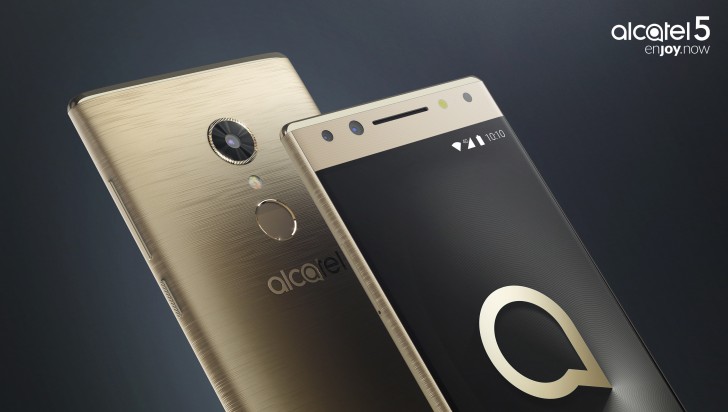
In keeping with its track record, the TCL company unleashed a slew of new devices complete with some confusing and open-to-change-upon-order specs sheets. To be fair, this year's lineup is a bit more premium than usual, with devices like the flagship alcatel 5 likely to end up in users hands even without a carrier contract deal. Joining its ranks are four alcatel 3 variants - the basic one, 3X, 3V and 3C, all rocking trendy new 18:9 panels. Even the entry-level actatel 1X gets to participate in the extra-tall display fun.

Huawei
No real mobile announcements from the Chinese giant this year. Well, that does depend on your definition of mobile, since a new MediaPad M5 tablet did make an appearance, alongside a gorgeous, ultra-light MateBook X Pro laptop.
ZTE
ZTE's new additions to the budget-friendly Blade family can potentially make a big market splash, given their aggressive sub-$300 pricing. The Blade V9 and Blade V9 VITA promise premium looks, strong mid-ranger specs and a solid camera experience. ZTE also showcased the Tempo GO as a part of the Android Go initiative.
Nokia
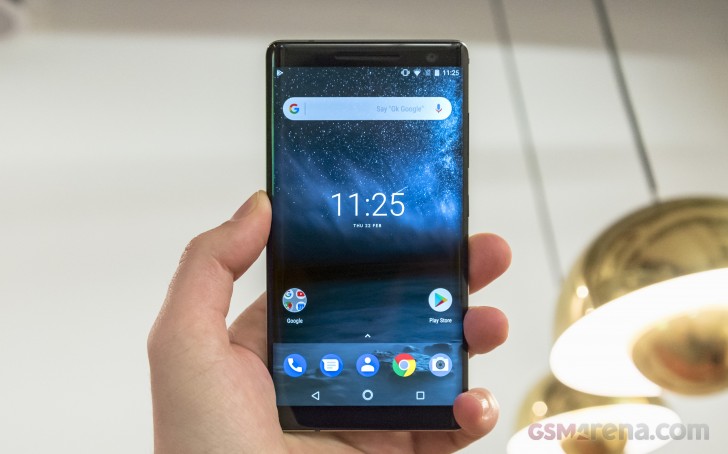
HMD brought a full and rich roster of new devices to Barcelona. The nostalgia train is running on full steam, as the Finnish company officially resurrected the Sirocco branding, in its shiny new Nokia 8 Sirocco flagship.
Surprisingly, it was not the only flagship product to appear on stage. Well, a bit debatable, since the Nokia 7 Plus is based on a Snapdragon 660, but they've packaged that in an exquisitely crafted aluminum body with ceramic-like finish.

The same overall praise for build quality and bill of materials applies to the new Nokia 6 (2018) as well, refreshed for 2018.
HMD has an Android Go offer as well in the retro-infused Nokia 1, complete with Xpress-on covers - another old-school Nokia branding brought back from the glorious days of yore.
But all the exchangeable cases in the world pale in retro-coolness compared to the 2018 Nokia 8110 4G - reborn in Matrix-worthy black and banana yellow.
Samsung
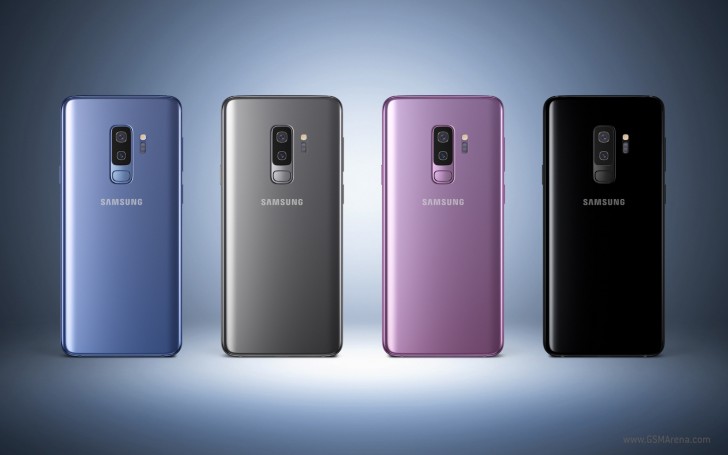
As expected, after an avalanche of leaks, Samsung launched the S9 pair at this year's MWC. Design-wise, the Galaxy S9+ and Galaxy S9 are more of a refinement on their predecessors than anything else, but with a lot of extra features and goodies hiding underneath.

Some highlights include a dual-aperture main camera for both phones, aided by a secondary snapper on the bigger S9+. 4K@60fps video recording and slow motion 720p@960fps are now possible with the new generation of chipsets from Qualcomm and Samsung themselves. And that's just the tip of the iceberg.
Sony
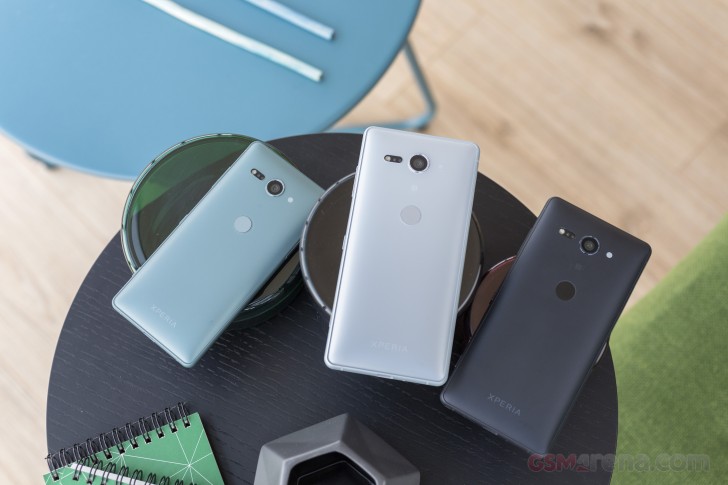
A pair of exciting new flagships from the Japanese giant. Pretty controversial ones at that. The Xperia XZ2 and XZ2 Compact feature a fresh new "Ambient Flow" design, a lot curvier than before, complete with 18:9 displays. Underneath, both are true powerhouses, built around the Snapdragon 845 and a refined version of Sony's familiar 19MP Motion Eye camera system.

HDR recording and display panels are some of the other highlights in the new Xperia XZ2 pair. The Dynamic Vibration system is a peculiar novelty as well.
Vivo
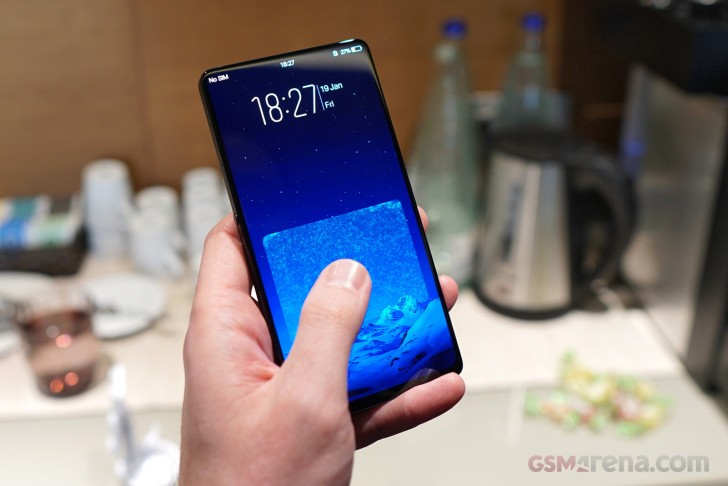
Vivo managed to soak up quite a lot of spotlight at this year's MWC with the APEX concept phone. It’s a unique device, or rather a unique tech demo (because it's what it is), for more than a few reasons. Thanks to new advancements in OLED technology, the APEX's 5.99-inch panel spans nearly the entirety of its front and also doubles as a speaker and earpiece. Plus, the company's next generation under-display fingerprint technology now spans the entire bottom half of the screen. To top it all off, the selfie camera pops-up when needed via a small motorized dome. If you haven't done so already, you need to check the vivo APEX out.

Asus
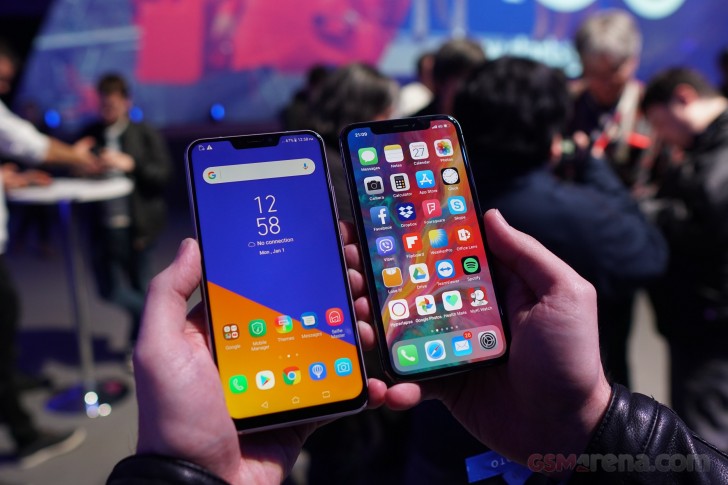
Asus also brought a full bag of new handsets to Barcelona, namely a fresh new Zenfone 5 line (not to be confused with the 2014 original). Asus is clearly shooting for feature-rich flagships on a budget with the Zenfone 5 and 5z. Both come with tall 19:9 panels, complete with an iPhone X-style notch, live animated emojis and a generous amount of AI sprinkled all over - a recipe worthy for 2018.

With a notch less and some downgrades in internals here and there, the Zenfone 5 Lite still promises to deliver all the software goodies and revamped experience of its bigger sibling. And last, but not least, there is the slightly more traditional Zenfone Max (M1) - no AI treatment for this one, but plenty of juice from the 4,000 mAh battery.
LG
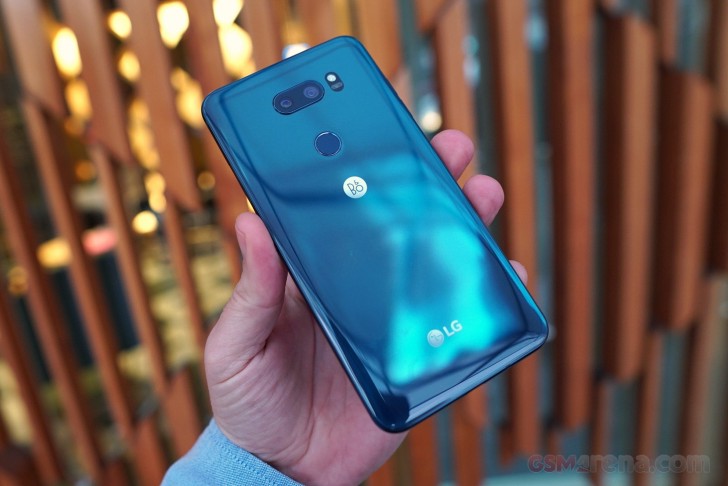
LG jumped hard on the AI bandwagon as well, releasing a new and ambitious in scope ThinkQ platform. To go along with it - a pair of devices, or should we say memory options for the V30, descriptively titled the LG V30S ThinQand V30S+ ThinkQ, with 6GB of RAM and 128GB or 256GB of storage, respectively. The only other change is the duo of new colors.

There wasn't really any new hardware to speak of in LG's "K" lineup either, although, technically, these were refreshed with 2018 versions as well.
So there you have it - the MWC 2018 at a glance. We're looking forward to a few other exciting announcements scheduled for later this month so consider this just the start of an exciting season.
The imaging giant’s mirrorless camera lineup has never looked more intimidating
By Sean O'Kane
on February 26, 2018 9:13 pm
![]()
Sony spent 2017 releasing pricey powerhouse cameras like the A9, but today the company announced one that sounds almost as good at half the price. The new full-frame A7 III splits the difference between the pixel-packed A7R III and the A7S II, the company’s low light and video king. It boasts big-time speed and just about everything else you could ask for, all for $1,999 (body only) when it ships in April.
The A7 III is being positioned by Sony as the “basic full-frame model” of its mirrorless camera lineup. But the new shooter is anything but. The centerpiece of the A7 III is a brand new backside illuminated 24.2-megapixel sensor with 5-axis optical image stabilization.
SONY CALLS THIS THE “BASIC FULL-FRAME MODEL,” BUT THERE’S NOTHING BASIC ABOUT IT
A new version of the company’s Bionz X image processor is inside the camera as well, doing all it can to squeeze the most out of that sensor. The results read like top-of-the-line flagship camera specs. The A7 III shoots stills at up to 10 frames per second in RAW or JPEG, with a buffer of 177 images for JPEGs, 89 images in compressed RAW, and 40 images in uncompressed RAW. It captures images with 15-stop dynamic range, and outputs 14-bit RAW files. And it shoots 4K HDR video, as well as 120 frames per second high speed footage at 1080p, and includes (of course) the ability to capture in the more cinematic S-Log 2 and 3 color profiles. The processor is efficient, too, allowing the camera to capture up to 710 shots on a single battery.
![]()
![]()
The A7 III also features 693 AF points that cover 93 percent of the frame, which work together to offer autofocus that Sony says is twice as fast as was found on the A7 II. The AF system is supposed to be robust even in tricky low light situations, too, which is good because the backside illuminated sensor allows an outrageous max ISO of 204,800.
Other features of note include a 2.3 million dot OLED viewfinder, which is noticeably smaller than the one on the A9 or the A7R III. The A7 III does have USB Type-C, though, and there’s an AF joystick on the back of the body, which is weather resistant (but not 100 percent sealed). There are 11 custom buttons scattered around the A7 III’s body, and the camera also (mercifully) includes the customizable “My Menu” feature that Sony launched on the A9, which lets users cut through the company’s often byzantine menu system by creating a page with all the options they most regularly use.
THE A7 III HAS A FEW TRADEOFFS COMPARED TO SONY’S MORE EXPENSIVE MODELS, BUT THEY’RE NOT DEAL-BREAKERS
For a “basic” camera, some of these specs are frankly hard to believe at first glance. But when you look at how fast Sony has iterated over the last few years, and the deep line of cameras that have come to market as a result, it’s really not that surprising that something like the A7 III could exist at a competitive price point. Some of the company’s most treasured features are missing, like the blackout-free viewfinder of the A9 and the A7R III, and full weather-proofing. The touchscreen on the back is also slightly limited in movement, as it only flips out and tilts. Something tells me plenty of people are going to be happy with those tradeoffs if they’re getting flagship performance at more than $1,000 less, though.
Sony’s been leading the way in the mirrorless camera segment for a while now, and has been coming particularly hard at the full-frame market, which is still dominated by DSLRs. But Sony passed Nikon in full-frame sales last year, and a camera like the A7 III is likely to help the company try and dethrone the king.

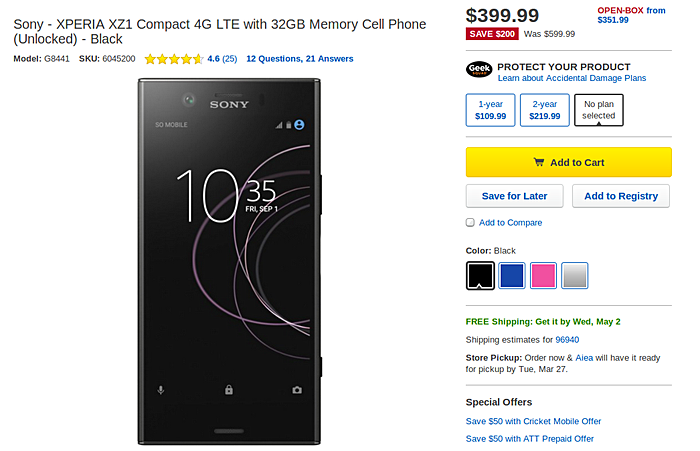
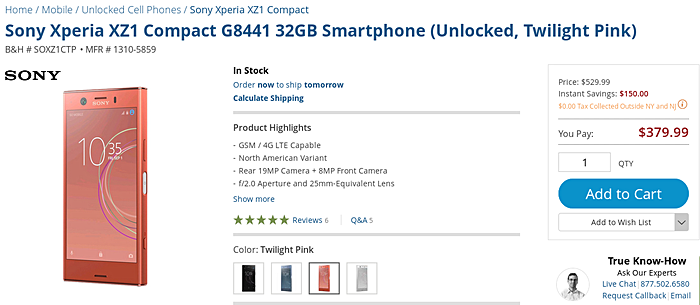
The Guardian interviewed Sony CEO Kaz Hirai, who talked in depth about the company’s various divisions, but we found his thoughts on the smartphone segment the most interesting.
First, the good news: Sony Xperia phones are here to stay. Now the bad: phones may not be. Hirai believes the future lies elsewhere but to capture and lead this future market, his company needs to stay in the communication business.
“It’s not about the smartphones of today; it’s more about looking beyond smartphones – at what are we going to be doing – and to be a player in this space; ideally to be a leader. For that strategic reason, I want to make sure we stay, not in the smartphone business, per se, but in the communications business.”
Some companies (Samsung, LG, Apple) already offer an alternative, phone-free life – smartwatches with voice call and LTE support, plus music streaming and wireless payments. The market’s thirst for large screens, however, means that few have dropped their phones in favor of a watch.

Sony, however, has effectively discontinued its smartwatch line, the last model came two years after Hirai took over as CEO. So whatever he envisions as the future of communications, it’s probably not wrist-worn.
The company has some forward-looking projects, but for now it's tough to see where they might lead. The Sony Xperia Touch is a fascinating wayto interact with standard Android apps and games and offers some novel functionality. And the Sony Aibo robot dog makes for an emotional connection to electronics.
The CEO also touched on one of Sony’s most successful businesses – the image sensor division. They are used by the leading manufacturers of phones, digital cameras and surveillance equipment, but Sony wants a piece of the growing automotive market as well.
Hit to Source link to read the full interview with Kaz Hirai. He also talks about Sony Pictures, Sony corporate culture and his own guiding philosophy.