Showing posts with label Motorola. Show all posts

20/04/2018

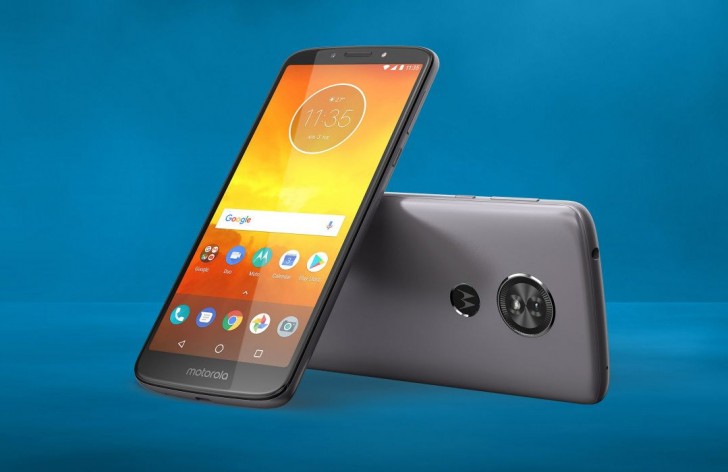
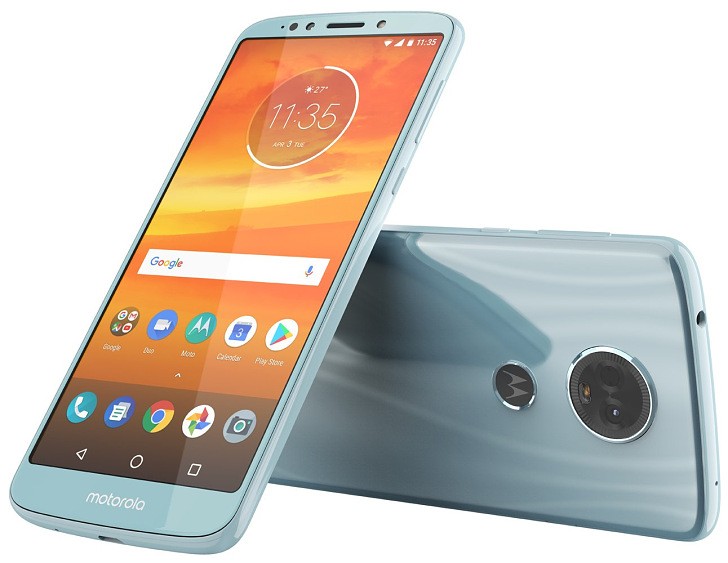
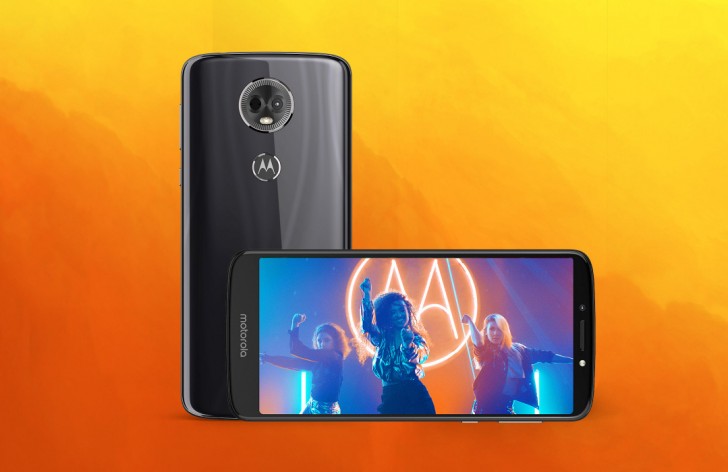
Moto E5 Plus has a 5,000 mAh battery, is joined by the Moto E5 and E5 Play

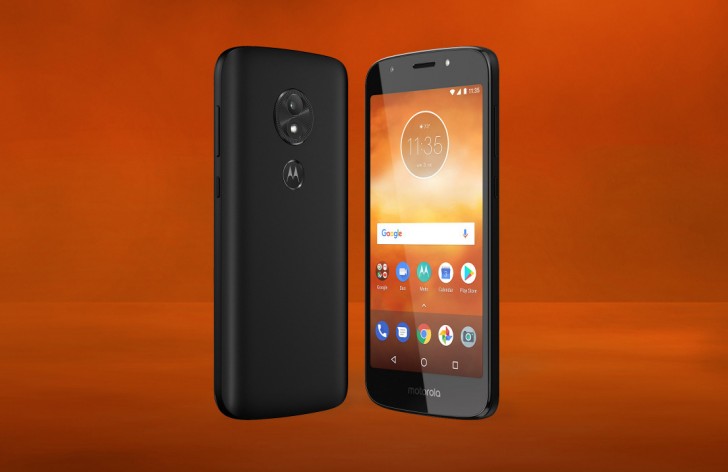
Motorola unveiled three affordable E-series phones, which in many ways mirror the new G6 trio. All three phones will launch “in the coming months” with Android 8.0 Oreo and even the most affordable model has a fingerprint reader hidden in the Motorola logo along with water-repellent coating. Also, the selfie cameras have LED flashes and your photos can be stored at full resolution at Google Photos for free.
But don’t think of these as the junior team, we think this first one might actually be a better phone than the Moto G6 Play (and at a lower cost to boot).
Moto E5 Plus
The Moto E5 Plus comes with a whopping 5,000 mAh battery and is bundled with a 15W TurboPower charger, which can push 6 hours worth of charge into the battery in just 15 minutes. All of that capacity does have a weight, however, and pushes the phone to 200g.
The screen is larger than any on an E-series before – a 6” IPS LCD panel with 720 x 1,440px resolution. It boasts Moto Display for at-a-glance info and quick replies to notifications.
Moto E5 Plus has a 5,000 mAh battery
The E5 Plus is powered by a Snapdragon 425 chipset with 3 GB of RAM and 32 GB of built-in storage (plus up to 128 GB microSD card). That’s actually a better chipset than the Moto G6 Play!
The main camera has a 12 MP sensor (1.25 µm pixels), f/2.0 aperture and phase detection AF. It records 1080p @ 30 fps videos. The 8 MP selfie cam (1.12 µm, f/2.2) has a dedicated LED flash too.
Some downsides of the Moto E5 Plus include an outdated micro-USB port (but a 3.5 mm jack is thankfully still on board) and no NFC. The phone will sell for €170 in Europe, the Americas and the Asia Pacific.
Moto E5
The Moto E5 scales back to a 4,000 mAh battery and a 5.7” (720p+) screen – still pretty big. The bundled charger is a 10W brick and the chipset is a Snapdragon 425.
The E5 camera department offers a 13 MP shooter on the back (1.12 µm, f/2.0) with 1080p video capture and a 5 MP selfie cam (with flash). Memory-wise there’s 2 GB of RAM and 16 GB storage, so you’ll likely need to fill the microSD slot.

The Moto E5 will cost €150, pretty close to the Plus model so you might want to have a look at our compare tool and see if you can justify saving those €20. The phone will be available in Europe, Latin America and the Asia Pacific.
Moto E5 Play
Finally something for those wanting a compact device. The Moto E5 Play offers much of the same hardware as the base E5 (Snapdragon 425/427, 2 GB RAM, 16 GB storage), but comes with a pocket-friendly 5.2” screen.
It has a standard 16:9 aspect ratio and 720p resolution. The battery feels small compared to the others, but isn’t small small at 2,800 mAh. And also, it's interchangeable, we've forgotten what that looks like. In the box you’ll find the same 10 W charger as the E5.

The Moto E5 Play main camera is an 8 MP shooter (1.12 µm, f/2.0) with 1080p video capture, the selfie cam is the 5 MP camera with flash from the E5.
Unfortunately, it seems that the Play version will launch only in North America. Pricing is unknown for now.
Source

20/03/2018

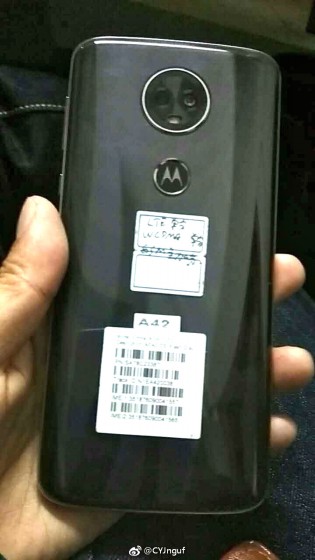
First hands-on photos of Moto E5 Plus emerge

About a month ago we saw the first, and subsequently last, render of the Moto E5 Plus but things have been quiet ever since.
This changes with these first hands-on photos of the phone-to-be in the wild, which are too poor in quality to give out anything new and only show what the render already had.
Nevertheless, let's sum up what we suspect and what we can see. The Moto E5 Plus will have an 18:9 aspect display (supposedly a 5.8-inch 720x1440px LCD), a fingerprint scanner on the back (embedded into the Moto logo) and a glossy backside, made to imitate luxury.
Moto E5 Plus - click for larger images Moto E5 Plus - click for larger images 
Moto E5 Plus - click for larger images
The cameras something the rumors can't agree on. Some expect the Moto X4-like on the back of the Moto E5 Plus to have a dual camera but it looks to us like there's a single camera and possibly a laser autofocus module in the second spot.
The rumors also point to a dual front facing camera but we can only guess at this point.
Source | Via

01/03/2018

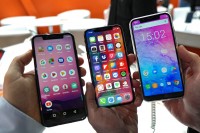
The notch is spreading for no good reason: the MWC was rife with iPhone X lookalikes


Smartphone makers are like school kids - they see the popular guy wear a weird hat and rush off to the store to buy weird hats too. It's easier than developing their own style. Apple has been just such a trend-setter in Smartphone High and after successfully undermining the headphone jack, it's now responsible for an explosion of notches.


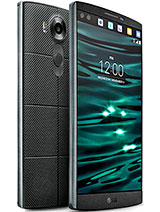
But screen notches didn't originate with Apple - time for a detour to History class. As former Motorola designer pointed out on Twitter, the MOTOFONE F3 had a notch way back in 2006. This one barely had an UI, though, so the notch didn't get in the way. The Motorola WILDER had an extra screen - no notch here, there was plenty of room on the bezels. But later a similar arrangement was used by the LG V10 and V20, which had thinner bezels so the main and secondary screens came together - you can think of this as an off-center notch.
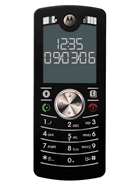
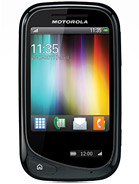
   
Motorola MOTOFONE F3 • Motorola WILDER • LG V10

However, Apple's iPhone X stands apart from these because they all treated that extra bit of screen as a separate screen. The X tries to flow the app's UI around the notch and just leaves padding when it can't. It's a clunky solution, but marketing demanded thin bezels. And now we hear that Google is considering adding software support for notches to Android P, so notches may be here to stay.

We don't necessarily like them, but some are better executed than others. And the MWC grounds had plenty of examples of notched screens so we sought the best and worst examples.

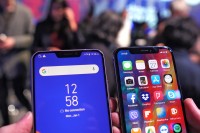
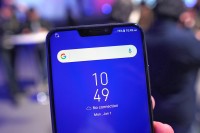
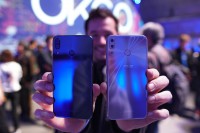
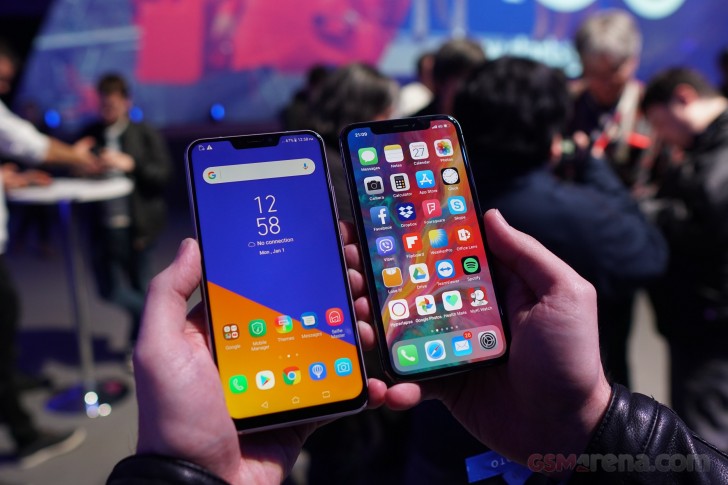
Asus adopted the notch for the Zenfone 5 and Zenfone 5z. The company boasts that its notch is smaller than Apple's (mocking the iPhone X while copying it). However, it's not the smallest notch as we'll see in a minute. Looking at that bottom bezel, this seems more like a notch for the sake of fashion rather than necessity.


      
Asus Zenfone 5 and 5z

There's some history of imitators beating the original - e.g. Hydrox was the original Oreo biscuit yet nobody has heard of them. Still, we don't think that Asus will be the Oreo biscuit of phones. We do hope that these companies realize that Apple's success came before the notch, not because of it. Designing a phone with part of the screen cut out won't suddenly boost it to iPhone levels of success. Plus, analysts make out the iPhone X to be something of a disappointment.

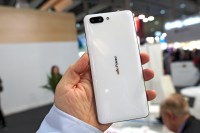
That said, some managed to impress. The Ulefone T2 Pro is one of the few phones to live up to the "bezel-less" marketing talk. Just look at it, the border is so thin that a pixel might fall of the edge of the screen! Hyperbole aside, Ulefone achieved a cool, futuristic look and for that we don't mind the notch at all.
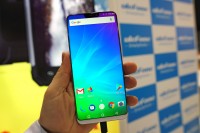

      
Ulefone T2 Pro

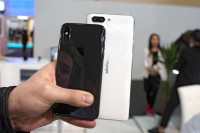
Its sibling, the Ulefone X, is less impressive in that respect. There's a fairly thick border running around the screen, comparable with the iPhone X, and with the thick bottom bezel, it makes you wonder if a notch was really necessary. How can hardware novelty and a needless clone live under the same roof?
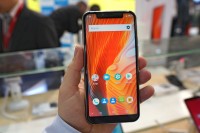
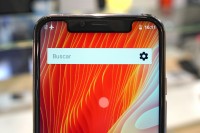
   
Ulefone X

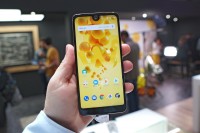
Let's change gears and look at the Wiko View2 and View2 Pro. The notch goes deeper into the screen and holds a prominent selfie camera. The design is very similar to the Essential phone. We like that the status bar has more room for notification icons, iPhone X-style displays run out of room just by showing the time and signal strength.

We like the Wikos for another reason. Sure, they look like Andy Rubin's Essential phone, but few others do. So this gives the View2's front a unique appearance, something that can rarely be said these days. For a bit of personality, we might live with a notch.
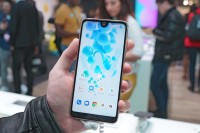
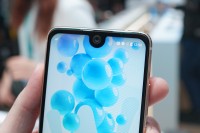
      
Wiko View2 and View2 Pro

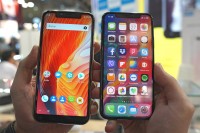
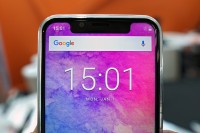
Then we get to a bunch of "me too" devices. Look at this Leagoo S9, for example. Sure, it costs just $150, but the software hasn't been prepared for the notch at all, not even the rounded corners - look at how it cuts off part of the icons in the status bar.

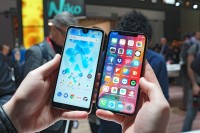
The Noa N10 is hardly any better in this respect.
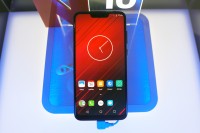
   
Noa N10

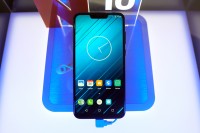
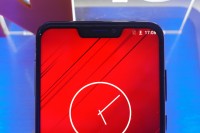
The Oukitel U18 does it too to an extent, though at least it has the good sense to spread out the icons on both sides of the notch, alleviating the problem a bit.
      
Oukitel U18 and U19

We're quite impressed by the Ulefone T2 Pro - it looks like you're holding an image without its frame. It may not be terribly practical for daily use from an ergonomic standpoint, but it sure looks so cool.

And we kind of dig the camera notch used by the Essential phone and the Wiko, just because they break up the monotony of the rectangular screen. Even the recent trend of rounded corners doesn't break away from the tedium of modern smartphones - a featureless front that can be mistaken for any other phone.

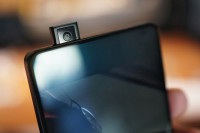
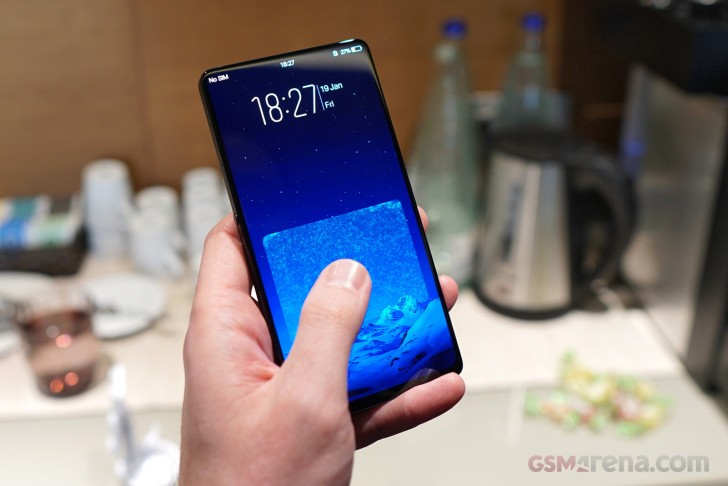
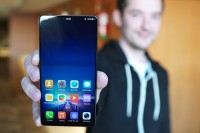
The vivo APEX showed it's possible to eliminate the top bezel entirely without having a notch at all. However, it had to put the speaker below the glass like the original Xiaomi Mi Mix. We didn't like the audio quality and it's so loud that everyone can hear your conversation. So, moving the earpiece is impractical. But the APEX did demonstrate that keeping the selfie camera without having a notch is doable (another way to do it is like the Honor 7i).
   
vivo APEX

While touring notched phones at the MWC, we started to reconsider Google's position in the Android world. We always thought of it as "Google's Android" but "Samsung's TouchWiz" (now Grace) or "HTC's Sense". Now, though, Google seems more like a curator of Android features rather than a leader and innovator.

That was always the case, we suppose. It took Xiaomi nearly a year to get Google to officially support taller than 16:9 screens and now the Pixel 2 XL uses one. And it has no audio jack. The notification area didn't have quick toggles until makers put them there. And split screen was pushed by makers long before Google adopted it officially (it took so long that Apple beat them to the punch).

Does Google really believe in screen notches? As in "Pixel 3 will have a notch" believe in them? Or is the company going with the flow, unable to redirect the flow of river Android? It's starting to feel like brands - even low volume ones - have more say in what next year's Androids will look like than Google does. With Apple you're never in doubt who's in charge, even when the team at Cupertino borrows features from others.

MWC 2018 is over, here are the highlights

MWC 2018 was jam-packed with exciting tech, which we had a lot of fun experiencing and reporting on. Hopefully you took just as much enjoyment reading our coverage and hands-on impressions. Just in case you missed something from the busy schedule, we have prepared a quick rundown of all the highlights of the Barcelona venue.


And just in case you prefer the more retro approach to things, here are some key points in writing as well:


alcatel


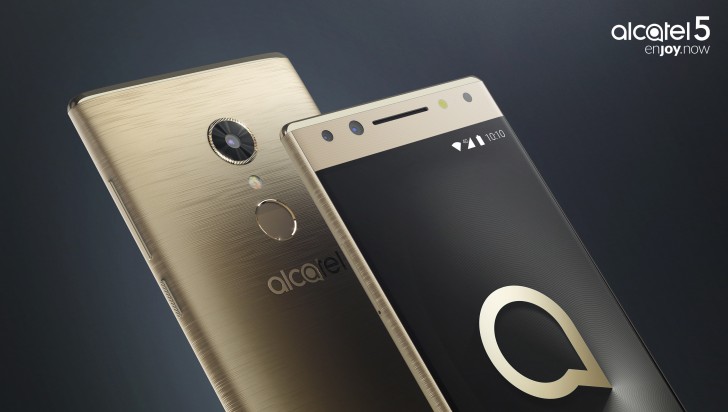
In keeping with its track record, the TCL company unleashed a slew of new devices complete with some confusing and open-to-change-upon-order specs sheets. To be fair, this year's lineup is a bit more premium than usual, with devices like the flagship alcatel 5 likely to end up in users hands even without a carrier contract deal. Joining its ranks are four alcatel 3 variants - the basic one3X3V and 3C, all rocking trendy new 18:9 panels. Even the entry-level actatel 1X gets to participate in the extra-tall display fun.


Huawei


No real mobile announcements from the Chinese giant this year. Well, that does depend on your definition of mobile, since a new MediaPad M5 tablet did make an appearance, alongside a gorgeous, ultra-light MateBook X Pro laptop.


ZTE


ZTE's new additions to the budget-friendly Blade family can potentially make a big market splash, given their aggressive sub-$300 pricing. The Blade V9 and Blade V9 VITA promise premium looks, strong mid-ranger specs and a solid camera experience. ZTE also showcased the Tempo GO as a part of the Android Go initiative.


Nokia


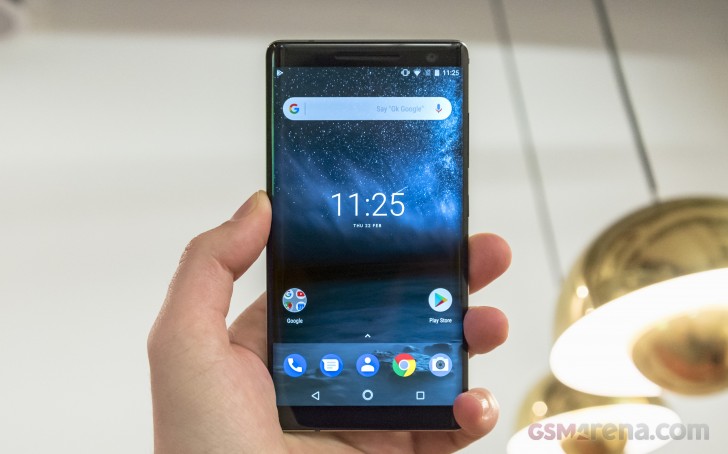
HMD brought a full and rich roster of new devices to Barcelona. The nostalgia train is running on full steam, as the Finnish company officially resurrected the Sirocco branding, in its shiny new Nokia 8 Sirocco flagship.


Surprisingly, it was not the only flagship product to appear on stage. Well, a bit debatable, since the Nokia 7 Plus is based on a Snapdragon 660, but they've packaged that in an exquisitely crafted aluminum body with ceramic-like finish.


The same overall praise for build quality and bill of materials applies to the new Nokia 6 (2018) as well, refreshed for 2018.


HMD has an Android Go offer as well in the retro-infused Nokia 1, complete with Xpress-on covers - another old-school Nokia branding brought back from the glorious days of yore.


But all the exchangeable cases in the world pale in retro-coolness compared to the 2018 Nokia 8110 4G - reborn in Matrix-worthy black and banana yellow.


Samsung


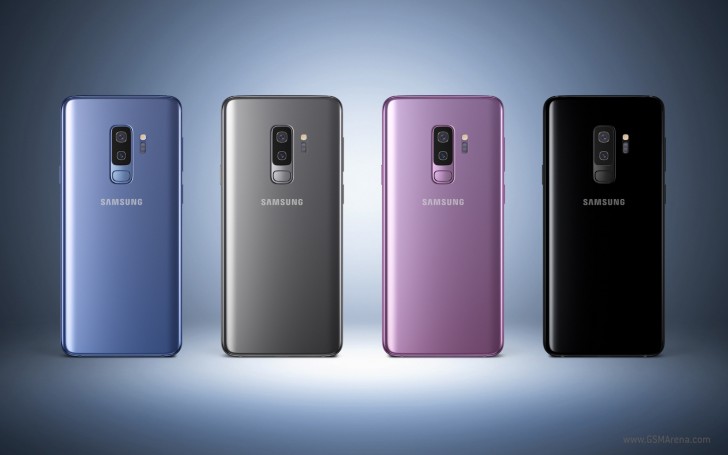
As expected, after an avalanche of leaks, Samsung launched the S9 pair at this year's MWC. Design-wise, the Galaxy S9+ and Galaxy S9 are more of a refinement on their predecessors than anything else, but with a lot of extra features and goodies hiding underneath.


Some highlights include a dual-aperture main camera for both phones, aided by a secondary snapper on the bigger S9+. 4K@60fps video recording and slow motion 720p@960fps are now possible with the new generation of chipsets from Qualcomm and Samsung themselves. And that's just the tip of the iceberg.


Sony


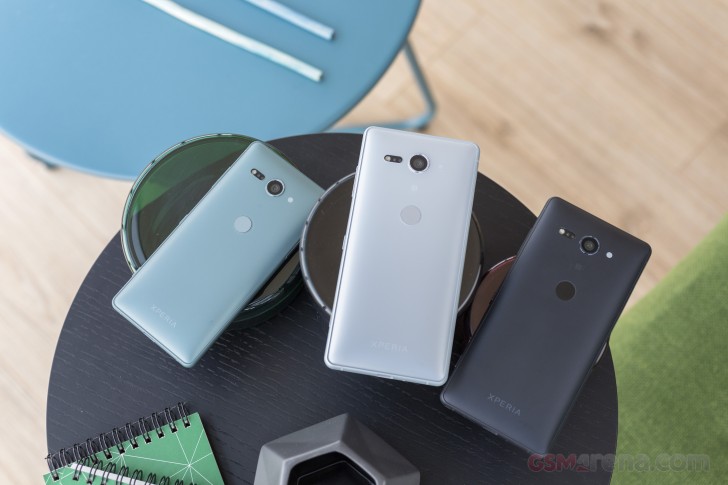
A pair of exciting new flagships from the Japanese giant. Pretty controversial ones at that. The Xperia XZ2 and XZ2 Compact feature a fresh new "Ambient Flow" design, a lot curvier than before, complete with 18:9 displays. Underneath, both are true powerhouses, built around the Snapdragon 845 and a refined version of Sony's familiar 19MP Motion Eye camera system.


HDR recording and display panels are some of the other highlights in the new Xperia XZ2 pair. The Dynamic Vibration system is a peculiar novelty as well.


Vivo


Vivo managed to soak up quite a lot of spotlight at this year's MWC with the APEX concept phone. It’s a unique device, or rather a unique tech demo (because it's what it is), for more than a few reasons. Thanks to new advancements in OLED technology, the APEX's 5.99-inch panel spans nearly the entirety of its front and also doubles as a speaker and earpiece. Plus, the company's next generation under-display fingerprint technology now spans the entire bottom half of the screen. To top it all off, the selfie camera pops-up when needed via a small motorized dome. If you haven't done so already, you need to check the vivo APEX out.


Asus


Asus also brought a full bag of new handsets to Barcelona, namely a fresh new Zenfone 5 line (not to be confused with the 2014 original). Asus is clearly shooting for feature-rich flagships on a budget with the Zenfone 5 and 5z. Both come with tall 19:9 panels, complete with an iPhone X-style notch, live animated emojis and a generous amount of AI sprinkled all over - a recipe worthy for 2018.


With a notch less and some downgrades in internals here and there, the Zenfone 5 Lite still promises to deliver all the software goodies and revamped experience of its bigger sibling. And last, but not least, there is the slightly more traditional Zenfone Max (M1) - no AI treatment for this one, but plenty of juice from the 4,000 mAh battery.


LG


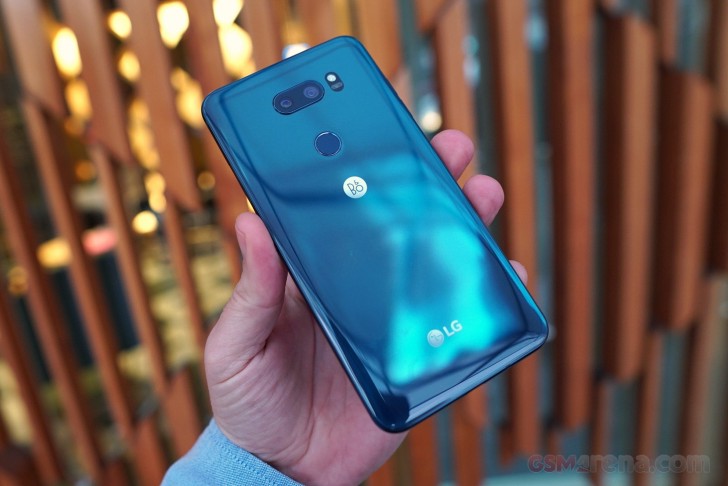
LG jumped hard on the AI bandwagon as well, releasing a new and ambitious in scope ThinkQ platform. To go along with it - a pair of devices, or should we say memory options for the V30, descriptively titled the LG V30S ThinQand V30S+ ThinkQ, with 6GB of RAM and 128GB or 256GB of storage, respectively. The only other change is the duo of new colors.


There wasn't really any new hardware to speak of in LG's "K" lineup either, although, technically, these were refreshed with 2018 versions as well.


So there you have it - the MWC 2018 at a glance. We're looking forward to a few other exciting announcements scheduled for later this month so consider this just the start of an exciting season.

26/02/2018

Motorola Moto E5 Plus official render leaks ahead of launch

We had a ton of leaks for the Moto G6 series throughout the past few weeks, so it was about time we hear more about the Moto E5 phones. And today we got an excellent glimpse of the Moto E5 Plus in a glorious press render.


The image spills the beans on lots of the specs - an 18:9 display, a dual-camera on the back, and a USB Type-C port at the bottom. It also confirms one of the paintjobs - Light Blue.


It's uncertain if those dots at the front stand for one selfie camera and a LED flash, or two snappers without a flash. Or maybe all three of those?


The Plus model should pack a 5.5" or more big screen but with low 720p resolution, and some power-efficient chip. We'll know more once the E5 Plus goes official with the rest of the new Moto phones sooner rather than later.


Source • Via